Building from the Ground Up
With legal pressure building on Japan to end its legal ban on same-sex marriage, grassroots organizations are helping men deal with the pressures of being gay.
The traditions of Japanese masculinity have long been known. It’s the mother’s responsibility to raise boys who are expected to carry the financial responsibility of the family. Men marry and have kids while giving away their lives to their company in order to provide. Yusuke is among many Japanese men who don't fit this stereotype. He can’t get married, have kids or build a “household.” He doesn’t want to marry a woman. After all, he’s a gay man.
Unable to abide by the social standards of being a traditional “man,” gay men are shackled by traditional gender values and forced to question whether it’s okay to be proud of who they are. However, Yusuke (who requested anonymity) proves that with the right support systems and a good community, gay men can feel comfortable to freely express themselves.
“When I first started attending these meetings and listening to others talk about their own sexuality, I realized sexuality is so diverse,” Yusuke said. “It’s not something you should be ashamed of. I became more confident at telling others about my sexuality.”
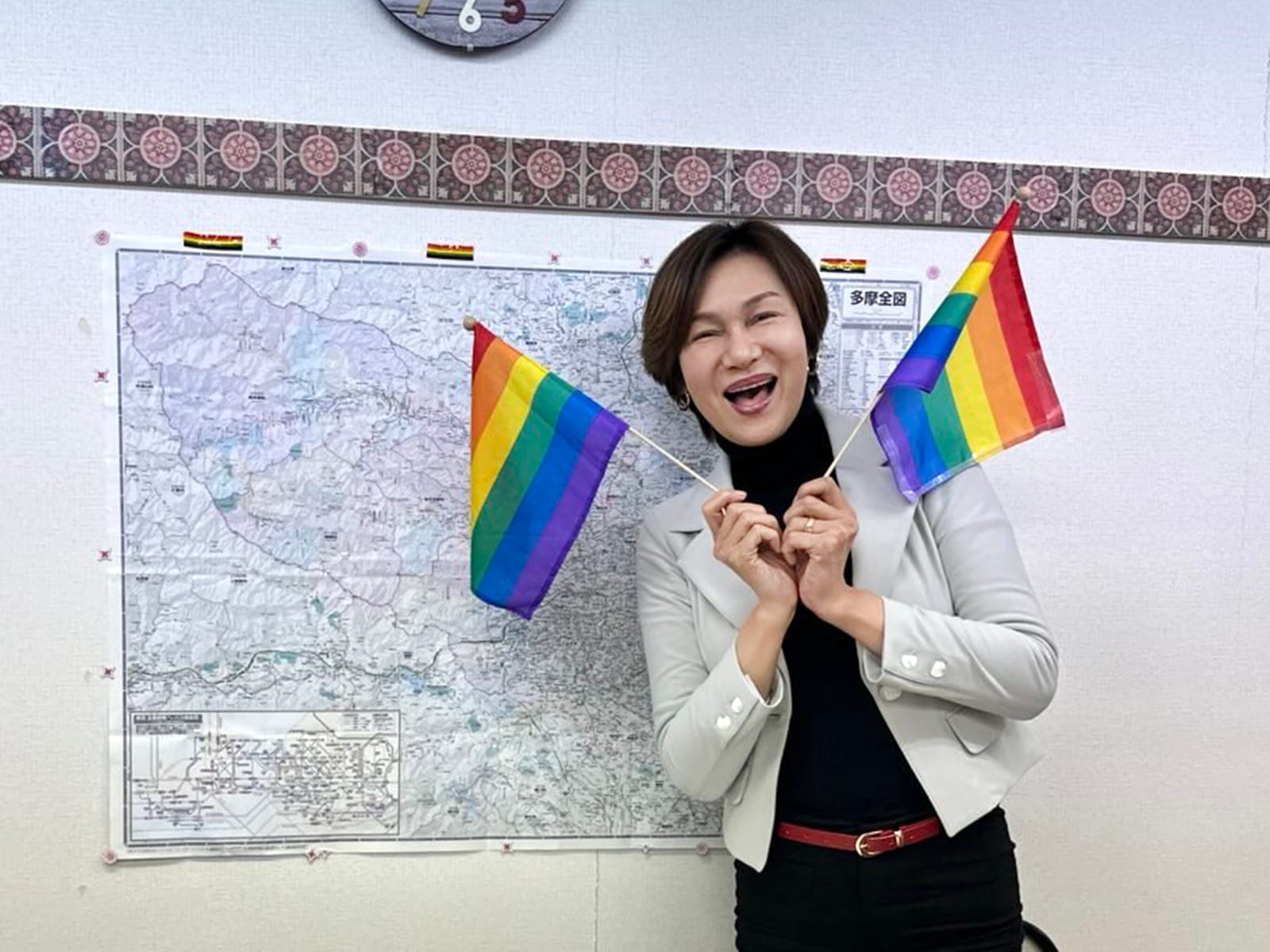
Japan is the only G7 country that still bans same-sex marriage. Yamana Kanako, an assembly member of Suginami Ward in Tokyo, says toxic masculinity is partly to blame, along with fear among older Japanese about how Japan might change if gay marriage was legalized. But most importantly, she says that the Japanese government wants to protect the “traditional” household.
“They believe that the traditional family is based on sex. If they accept gay marriage or if they accept a different surname for the family, they think [the traditional household] will collapse,” Yamana said. “I think they believe that keeping their traditional style is like keeping their power, their patriarchal style.”
Yusuke is a former medical social worker from Hiroshima. He grew up in an era where the idea of masculinity stemmed from suppressing emotions, continuing the family lineage, and creating a household of his own. Though he identifies as a man, he grew up knowing that his sexuality meant he would never be able to live up to society’s expectations of what it means.
Burdened by these expectations, Yusuke hid his sexuality and emotions. He suppressed who he was and lived in shame.
But putting up a facade and always being careful to hide his true identity and personality exacted a mental toll. He managed to open up to a select few people but even then, his anxiousness and uneasiness never vanished. He yearned for something more. A connection. People who understood his experiences. A group he could share his pain with. He wanted genuine support.
Hiroshima, compared to Tokyo and Osaka, is quite small. It offered little in terms of LGBTQ support systems, information or community. However, he found one cafe that ran regular meetings for people to open up about identity issues, Hachidori-sha Social Book Cafe.
This cafe, in collaboration with another LGBTQ support group, Coco Iro, ran meetings where people gathered to listen to others talk about their sexuality. His first session is what truly inspired him to start Nina Arica, a grassroots initiative, in the Spring of 2023. Nina Arica caters to the LGBTQ community and those who are confused about their sexuality or questioning their identity.
“When I started attending these meetings and listening to others talk about their own sexuality, I realized that sexuality is so diverse,” Yusuke said. “I started to feel that it is not something you should be ashamed of, unusual, or abnormal. These feelings started to fade away. I gained some courage, and I became more confident in telling others about my sexuality.”
Yusuke imagined other adults going through the same hardships, without a place to freely express themselves. He wanted to spread his confidence and help others the way the book cafe helped him. He and Yukihiro Kitani, opened Nina Arica. The two hold lectures, events, and have bi-weekly gatherings for those who want to make connections without conforming to societal pressures and norms. They also work closely with Coco Iro—a group that primarily deals with children—so that they can help older people understand themselves and their sexuality better.
Now Yusuke and Kitani’s organization has garnered a sizable community. People regularly come from as far as Okinawa or Aichi prefectures so that they can protect their privacy while being able to freely talk. Yusuke is still actively pursuing his goals of spreading information about sexual minorities and has reached a major achievement; Nina Arica helped organize Hiroshima’s first Pride Parade in October. Yusuke has also noted that through their regular meetings, they’re able to educate and shift the idea of what being a “man” is.
“At our meetings, people often talk about how much pain they have carried with them or the troubles they’ve had and agonies they had to live with,” Yusuke said. “However, this is especially common with men over 40s. Because they’re men, they talk about how they’re supposed to have succeeded the family, or ‘ie,’ their family grave, traditions, and homes. These responsibilities were imposed on them.”
Nina Arica is still a small organization but they are gradually filling the information gap the older LGBTQ generation currently faces. They give talks at schools, workspaces, and universities, ensuring the spread of credible information. Though they work mainly from Hiroshima, they are looking to expand to other prefectures.
The mix of grassroots activism, online communication and support and encouragement from communities outside Japan is creating changes in the political landscape. But activists like Yusuke say these changes are cosmetic and don’t go far enough.
Two steps forward, one step backward
One example was the LGBT Equality Act that was supposed to be enacted in June 2020, just before the Tokyo Olympic Games. The LGBTQ community used the Olympic games as a platform to leverage their message and put foreign pressure on Japan to act on LGBTQ rights. However, this bill, that was supposed to abolish LGBTQ discrimination was constantly delayed, revised, and has still not been enacted.
Those who grew up in the traditional education system may still feel lost, confused, and unaware of their own sexuality. It is especially hard for those in the countryside who lack resources and a support system to truly express their feelings out of fear of being shunned by their local community. Yusuke and Kitani wanted to address this issue and provide a space for adults with Nina Arica.
“I think what’s most important is to find someone; a comrade, a friend, a fellow,” Yusuke said. “Otherwise, it is very difficult to start all by yourself.”
In 2023, the Japanese government passed the “Act on the Promotion of Citizens' Understanding of Diversity of Sexual Orientation and Gender Identity.” As the name implies, this law merely encourages people to “understand” LGBTQ people.
Matsuoka commented on the law, saying “what we really needed was to ban discrimination…the law itself is very cosmetic.”
Many in the LGBTQ community were frustrated with this law, which reads: “regardless of sexual orientation or gender identity, all citizens should be able to live in peace”. That seems to suggest that sexual minorities should conform to the mainstream in order to preserve the peace and minimize dangers to the rest of society. There are even instances where adversaries of LGBTQ rights use this law against the community.
Karen Yoda, a transgender politician who ran for a lower house election in western Tokyo including Ome City in October 2025 says, “The LGBTQ community, like us, are cast as enemies and dangerous, risky people. Now this sentence is actually used as or abused as one of the reasons for keeping women safe and not accepting or rejecting trans women into women's sports teams.”
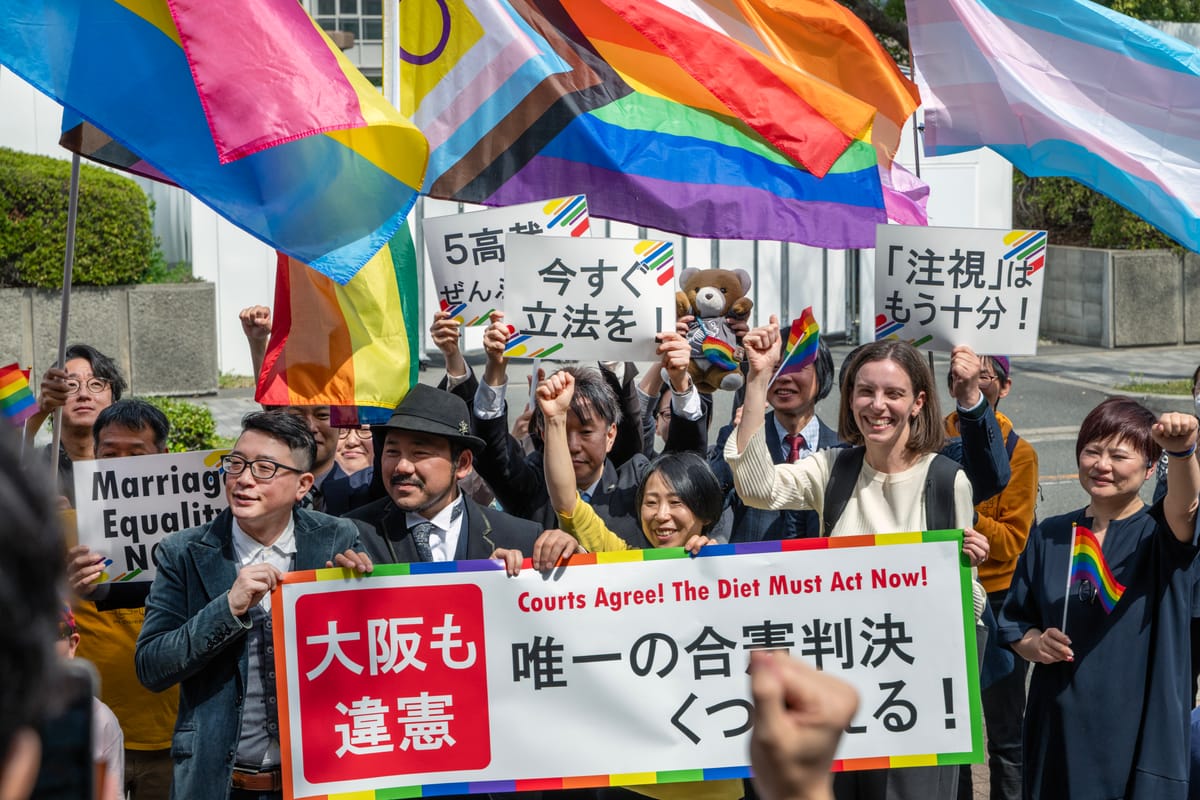
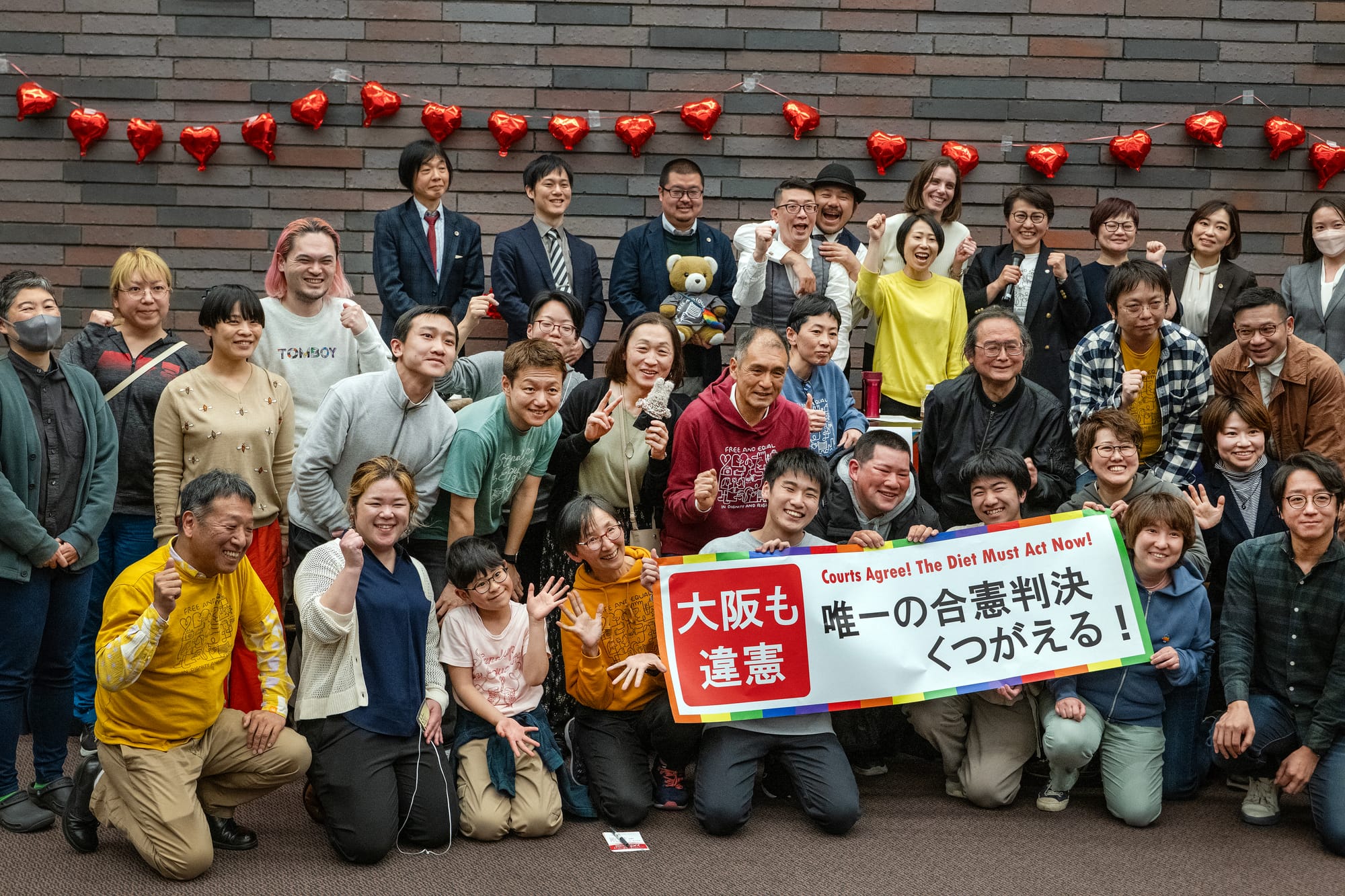
Though parts of the 2023 law may be cosmetic and don't add much value to supporting LGBTQ rights, activists nevertheless praise it as a small step in the right direction, especially with the world watching and reporting the government’s every move. The government is under growing legal pressure — for example, the Osaka High Court ruled on March 25, 2025, that the ban on same sex marriage is unconstitutional.
The Japanese Supreme Court, which ruled that sterilization requirements for legal gender recognition were unconstitutional, is expected to make a decision on whether or not the ban on same sex is unconstitutional, this year at the earliest.
The Japanese Constitution states in its 24th clause, “Marriage shall be based only on the mutual consent of both sexes and it shall be maintained through mutual cooperation with the equal rights of husband and wife as a basis.”
“If they can amend the 24th clause in the constitution to where it’s not just heterosexual couples but same sex couples, then they can move forward with marriage,” said Shuto Inoue, an advocate for Marriage for All Japan. There’s still many steps.”
Several other high courts across Japan have all come to the same conclusion: the ban on same sex marriage is unconstitutional. But in November, the Tokyo High Court ruled the ban on same-sex marriage is constitutional. Many community members and supporters say that the constitution does not specify which “sexes” are allowed to get married, rather, it highlights that the couple should have rights as “husband” and “wife.” These titles don’t have to correlate with gender but could merely act as titles in the relationship. However, Tokyo is the only high court that ruled the ban is constitutional, potentially stalling progress towards legalizing same sex marriage.
A Generational Gap
The Japanese government often opposes anything that threatens the security of the “traditional” household structure—such as married couples carrying separate surnames and the legalization of same sex marriage—since they do not want to lose their power and ability to control the family, say analysts. Japan’s newly elected Prime Minister Sanae Takaichi opposes same sex marriage and a selective surname system.
“Takaichi opposes gay rights and revising the surname law because she is conservative and supports traditional family values,” Jeff Kingston, professor of Asian Studies at Temple University in Tokyo, said. “She is a member of ultraconservative Nippon Kaigi, which is an influential reactionary lobby group that opposes women’s empowerment and gay rights.”
The prevalence of these ideas in the media, government policies and society has affected the stereotypes of what a “Japanese man” should be and is perhaps part of the reason why Japan is focused on practicing the division of labor. Experts say what’s more alarming is witnessing the effects of toxic masculine ideas leaking into some parts of the LGBTQ community.
“Some [community members] may say that they're not discriminated against when they are. They try to distance themselves from the LGBTQ movement, and sometimes they even say they don't want to see this movement,” said Matsuoka.
Shinjuku’s Ni-Chome has for decades been a vital hub for Japan’s gay community and houses some of the most prominent community members. However, Matsuoka says with the generation gap, there are times where old and new community members don’t see eye to eye. Much of Shinjuku Ni-Chome’s movement supported male homosexual relationships; lesbian and trans people are in need of representation.
“There's actually a difficulty between Ni-Chome and LGBTQ community,” Matsuoka said. “The gay community that actually led the mainstream LGBTQ rights movement have kind of stayed distant from this new movement that got momentum in the 2010s.”
This movement in the 2010s spread information about Japan’s LGBTQ lifestyles through the use of media, dramas, and online reports. Through this movement, people in Japan became more aware of people’s struggles and hardships of coming out or being “outed” by close friends and families. Information was finally spreading about the community and the ones spearheading this new movement is the younger generation of LGBTQ people.
Their hub has transitioned from Shinjuku to Shibuya as annual pride parades are held there, LGTBQ friendly shops are gradually increasing, and in general, Shibuya has become a city for young, open-minded people seeking to freely express themselves.
“The degree to which you understand or accept the LGBTQ community is very different,” Matuoka said. “And so there's a generation gap. I think the younger generation has a higher acceptance rate or understanding, but the older generation may still think that this might be an illness or just a passing phenomenon. We have to dispatch correct information to fill this gap. To do that, maybe you can have workshops or educational seminars at workplaces or can introduce or teach with correct information and educate.”
Though disseminating information on LGBTQ has steadily been increasing, especially amongst the younger generation and with the help of online platforms like YouTube, TikTok, and Instagram, getting this information and support system to the older generation who may not use such platforms is a hurdle in the community. However, organizations like Nina Arica and Coco Iro are fulfilling such missions.
Progressives like Yoda are fighting to introduce sex ed early on in schools and ensure such education is mandatory so that kids grow up knowing the responsibilities of sexual intercourse while understanding who they are as a person.
“I do still need to get to the Parliament,” Yoda said. “I would like to have all the younger generation look at me and say, ‘I'm their hope.’”
The Community’s Future
Nina Arica and Coco Iro are examples of how local organizations are slowly changing LGBTQ landscape in Japan’s countryside. Challenges remain: limited resources outside big cities, a persistent generational gap, and a parliament lagging on any progress to move forward with LGBTQ rights. However, with advocates, community members, and politicians hard at work, Japan’s LGBTQ community has been making steady progress to a more accepting Japan. This is a mission that Yoda is tackling in Ome, a problem academically researched and written by Matsuoka, and an issue that will take several years to be solved by organizations and brave people like Yusuke and Kitani.
“I think if you find another person who has the same ambition, it leads to gaining courage and being courageous,” Yusuke said. “I was able to take that first step because I felt okay about myself, my identity, and my sexuality. I was able to feel proud about who I was.”
Comments ()