Grassroots Organizing Cuts through Political Differences
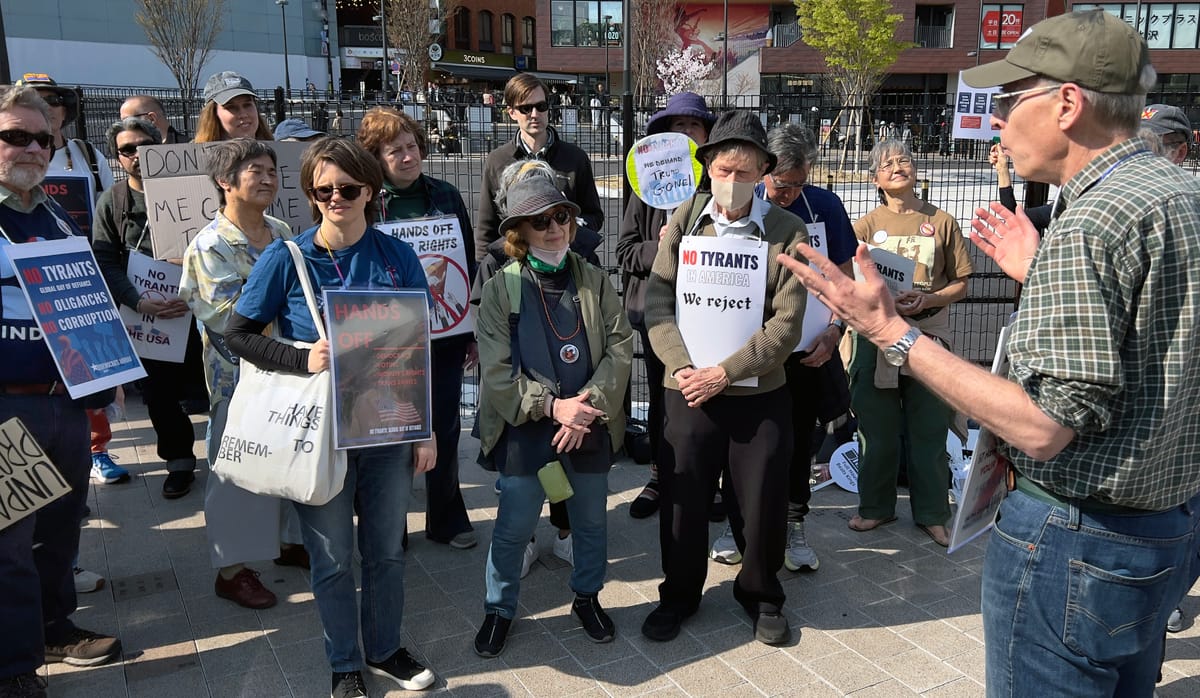
Following No Kings protests against fascism across the United States and abroad, a continuation of Unfiltered's discussion with Joan Bailey, Rich Bailey and Matt Noyes on the movement to protect Democracy in the United States and the linkages to Japan's own political struggles.
This is part two of a two part series, following Part One: America First versus Japanese First, which was published last week.
 Unfiltered Japan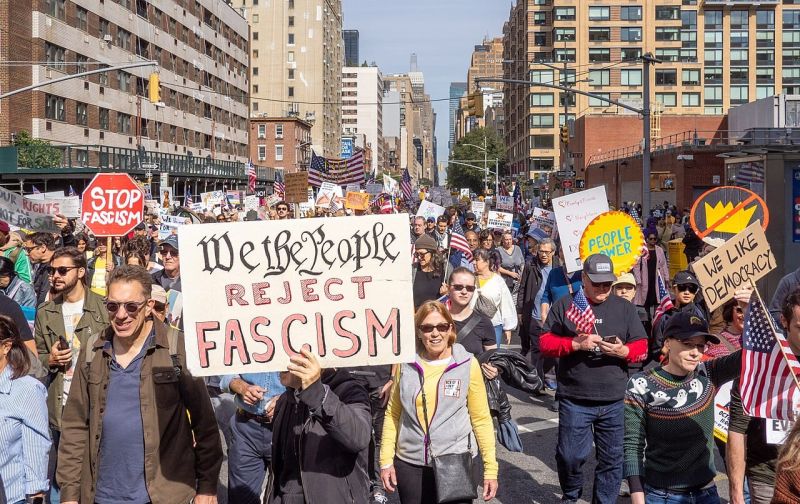
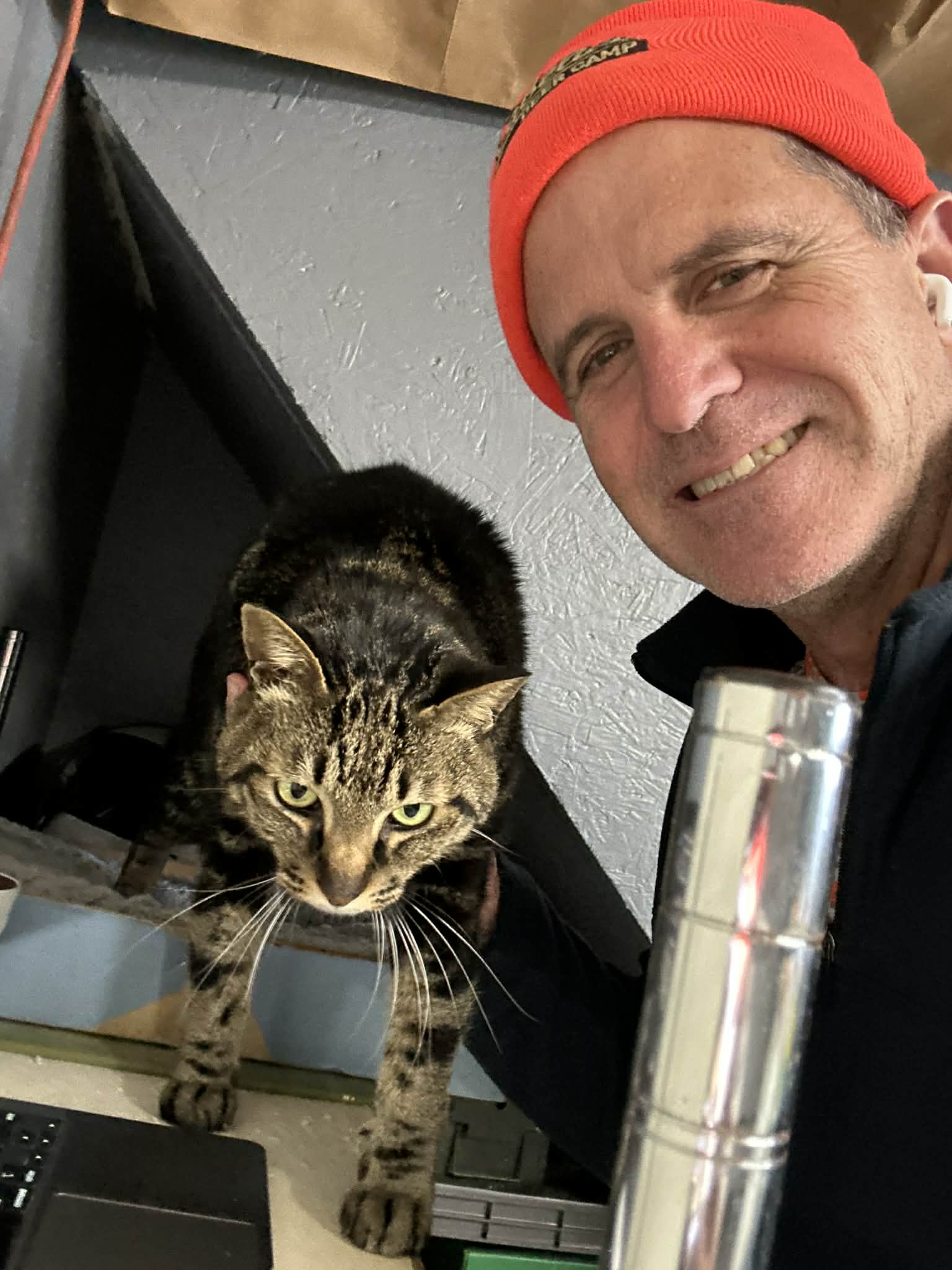
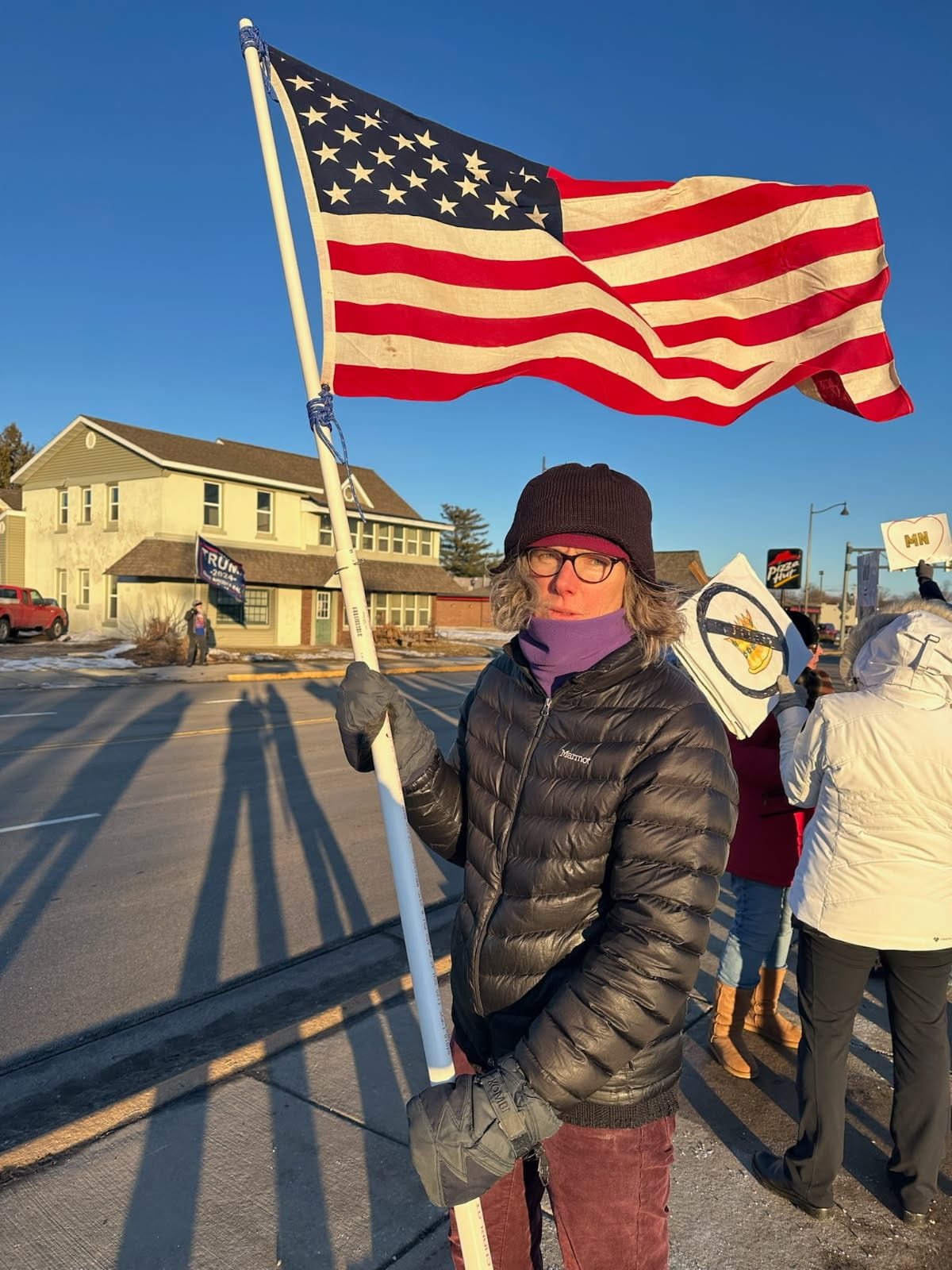
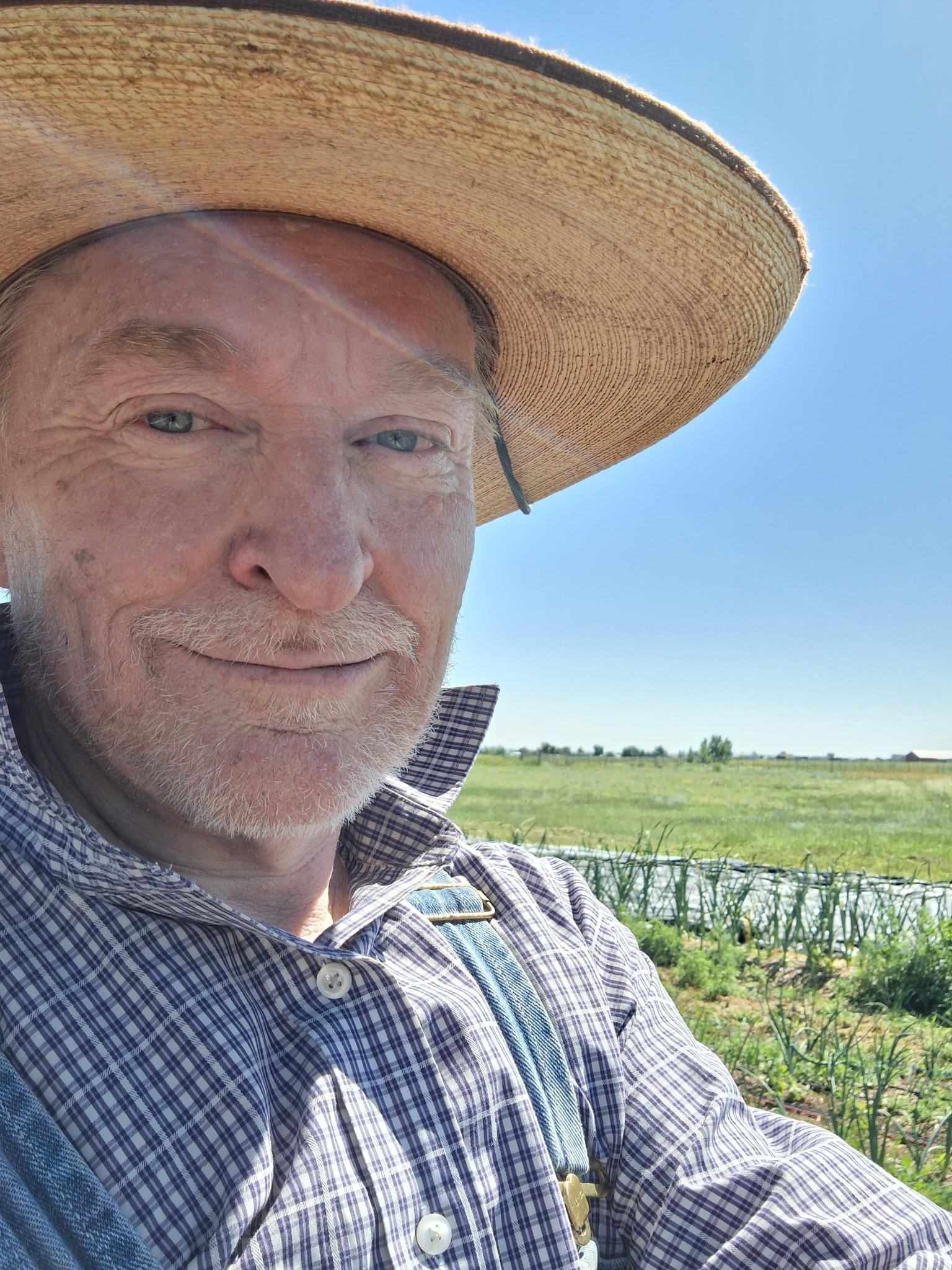
From Left to Right: Rich and Joan Bailey, and Matt Noyes
Unfiltered: How are the Republicans or people you know reacting to this in your communities?
Joan When we went canvassing (door knocking) for the last election, we met a number of people who told us, “I'm never voting Republican again. There's no way.”
That was surprising. That was an interesting effect because those are people in their 80s and they're set in their ways. I also think there are people at the protests, whatever their affiliation, who would never vote Republican.
At the protests, we see people like 75-year-old retired plumbers. It's important to show up, and it also matters because it's having an impact in the rural areas.
We were traveling on a country road and saw this massive old farm wagon had a big sign basically on the side that said, “Believe your eyes, not their lies.” For someone in a rural area to do that is impressive.
Wisconsin is a bit like Minnesota in that the culture is very similar. You don't talk about politics or religion. If you do, you do it very delicately and then you move on to a recipe or the weather or the Packers (football team). But people are like, “Now is not the time to be nice. We can still talk about these things, but we also need to take a stand because this is a moral issue. We don't have kids, but I want my nieces and nephews and their kids to know where their aunt and uncle stood.
Could you elaborate on morality?
Joan It’s not about being a Democrat or a Republican. It's not politics. It's right and wrong. This is fundamentally wrong. I think people feel like, “No, this is not acceptable” — whether it's following the rule of law, whether it's treating people humanely.
The government’s counter argument isn't really about following the law or treating people humanely, but they twist and frame the discussion around immigration for them to be right. It's a classic political pivot. You pivot and attack. But it doesn't necessarily work when our side says no, we're talking about morality and humanity.
There have also been comments like you wouldn't get hurt or nothing would happen if you didn't fight. Don't resist. But these people aren't violent. You think about observers like Renee Good, she wasn't doing anything. She was just filming. And Alex Pretti was there helping someone.
Overcoming Fear for Solidarity
Rich With ICE, their only answer to the problem is, unfortunately, violence, whether it's arresting you or shooting you or tear gas or pepper spray or some such. From the ICE point of view, protestors are not respecting their authority.
In America, we have the right to free speech and protest. But suddenly to be tear-gassed or pepper-sprayed for protesting...
There's some protests where you might feel scared or feel the danger, but you still go out there to protest. How do you overcome fear?
Joan I don't think it is as risky yet as it is in Minnesota. One time, one man showed up with a big Trump flag and was waving it. Later, three or four people joined this man, one of them came across the street to talk to us.
Of course, I am worried, but I think people are learning what they need to do, and groups around America are training to be legal observers.
For us, when that guy came out and reached for his phone, we prepared for the worst. I went into hyper-vigilant mode.
Because in Wisconsin, you can have a concealed carry permit. I don't like it. I find it very frightening. It's very stressful.
But I can't NOT do it. I hate it. I'm like the last person who would protest and go door knocking. That is not what I would normally do.
For me, to be able to live with myself, I'm going to do those things. I can go stand in the cold for an hour and hold the American flag. And look at the guy across the street with his flag, which is not an American flag. He has the right to free speech, he has the right to be out there the same as I do. We're both taxpayers, we're both potential voters, we are equal.
I absolutely disagree with everything that his flag represents but he has a right to free speech. If I didn't know that about him and ran into him in the grocery store, and he dropped his bag, I'd help him. We would just do that for each other, right? That's part of what the other side is trying to do, to divide people, and that's just ridiculous.
In our culture here, particularly in a small town, you just make conversation with people. You don't need to know anything about them but you happen to be in this space and it's just our custom to make small talk because it's just friendly.
Matt Really surprising that I’ve seen almost no police presence at demonstrations. I think they’re trying to avoid confrontation. The temperature is much lower without them. If they show up with riot gear, the tension rises. I haven’t seen ICE at any of these demonstrations, either.
The constant threat is terrible for immigrant families, people aren’t leaving their homes. Most supermarkets have a home delivery option, so people are ordering in.
Still, you worry about whether people are getting proper health care and going to the hospital or other services. So it's still really stressful.
There is a lot of fear among immigrants, but also there is a lot of organizing going on. My sister recently did training with the Colorado Immigrants Rights Coalition, which provides legal resources. People can call in if an ICE incident like a raid happens. She's one of the people who can receive a phone call and refer them to supporters.
A notification system will let other people know, so that some people can go to the site. My sister is trained to go and interview families if a family member gets deported to get the information for the Immigrants Rights Coalition and record what’s going on. There are also more newly established organizations doing training.
You’re organizing at the grassroots. Tell us how you are doing that.
Rich I co-started this Indivisible group. On April 7th, we're having an election here, and one important point is the Wisconsin State Supreme Court. So that's super important, and so we're going to be volunteering for that.
There's a congressional race in the fall in November. I mean, the only thing with American politics that can really happen is for Trump to be impeached.
That won't happen because of Congress right now. But if you can change Congress, which is coming up in November, then that's a possibility. So if you want to be purely subjective, like literally the only thing that can make any difference is changing Congress.
Joan What we are trying to do is organizing the protests and canvassing, but also just to connect with our neighbors, start having conversations and reconnect. Part of this division is because we're not connected. So take them a casserole when they have a funeral or just interact with people, reach out to them.
I've also been advising people to start paying attention to very local politics as to who's coming up for election, who’s going to be on your city council or school board. They get zero national coverage, but those are the ones that really impact your daily life.
I really feel like America has become very lazy, very insular, siloed. And I think we have done that on the individual level, and now we're afraid of each other. I'm not going to be afraid of my neighbor. You can manage your community, but it does take effort, and it's not easy.
Matt In the last few years, there have been more “potluck” type dinners. The idea is to bring people together through friendship or community networks to meet more people and share information. They may draw people from a dozen different projects to sit together, eat, and get to know each other. I think the emphasis is on building relationships and trust among people.
It's not just instrumental like “how do I get people to come to my event?” but how to get to know each other and build the relationships that we need to have so we are better able to be there for each other.
I think it is part of the Occupy legacy because it’s very horizontal grassroots organizing. You can be a member of other organizations but you can also come together in your communities.
What’s interesting is that on paper traditional organizations look like they are very organized, but are people really organized in practice?
Remember after the Fukushima Daiichi Nuclear Disaster of 2011, there were people participating in demonstrations for the first time. It’s reminiscent of one of the first protest actions against nuclear power plants in Japan, when people gathered and shared their concerns.
Hajime Matsumoto in Tokyo’s Koenji area suggested that we need a “Hanami Economy,” a social movement, where people get together to get to know one another. That’s what it is.
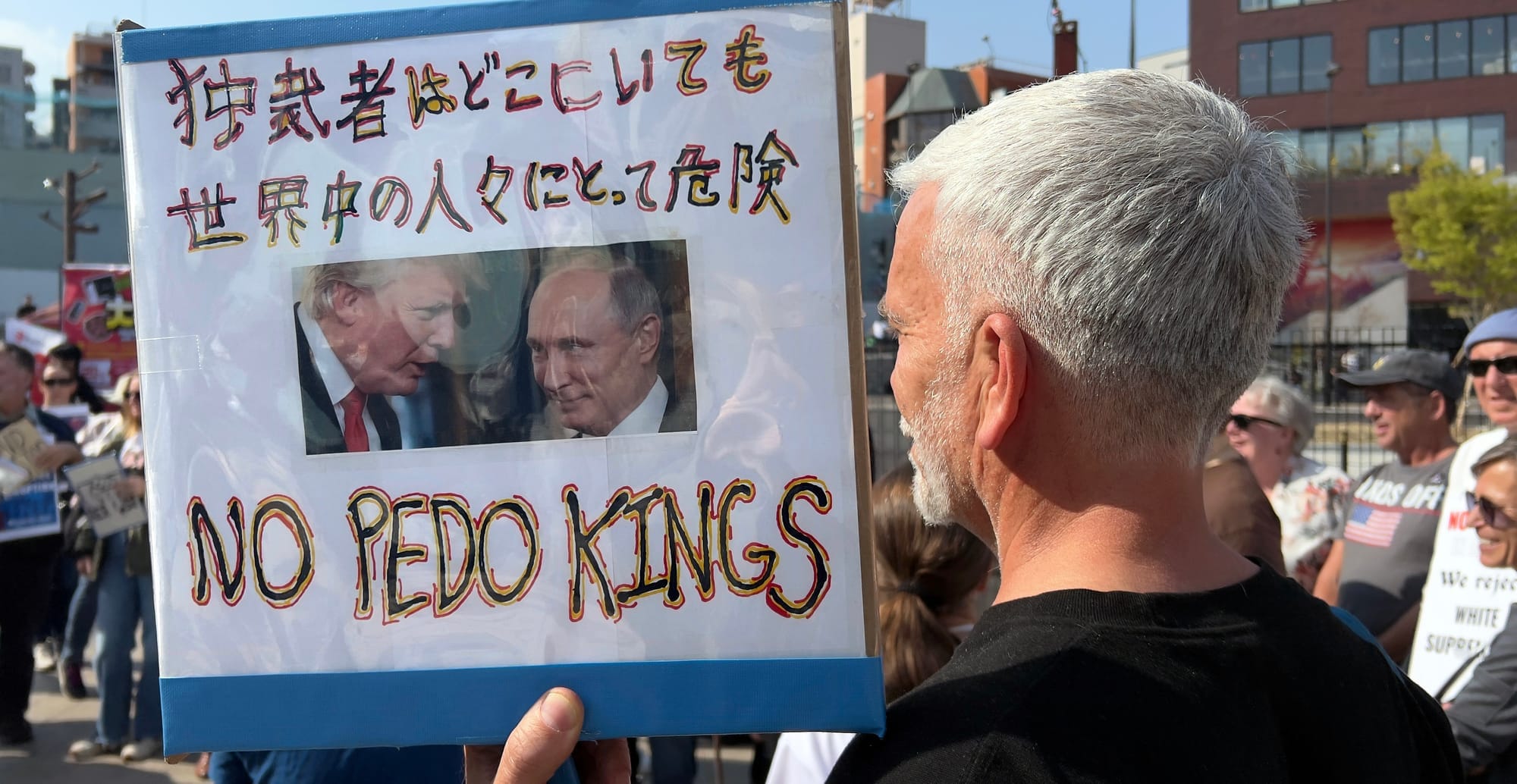
We Are Not Alone
Matt So for Minneapolis, a longtime organizer said in a journal interview that it was not primarily from community organizing groups, but from people talking to each other, neighbors creating the networks for mutual support through their own conversation and creativity. It’s a different kind of organizing.
Rich Joan and I lived in Japan for 14 years until 2023, and we had always said that when we came back to the US, we wanted to get more involved. To be honest, I hadn't really planned on becoming a local politician, but we went to a summer picnic for the Columbia County Democrats, and we were there having some food and conversation. Somebody said, “So have you ever thought about running for local office?"
We literally had our first Indivisible meeting on a Friday, and then Saturday, Alex Prettie got shot. We decided we can't wait until next February or March. So we had a meeting on that Saturday, and I made all the social media accounts and graphics on Sunday, and then we just put it out there because we just couldn't wait.
Some protests are bigger, but a bunch of smaller cities were having regular protests, and there wasn't anything in our town with a population of 10,000. We're actually very close to Madison, Wisconsin, as the capital, and it was just sort of surprising to me that there were no protests in a relatively big city. So that was kind of the motivation. If everybody else is doing it in small rural areas, why are we not doing it?
What’s important that is coming out of these hard times?
Joan What’s really nice about it is we all get together and you realize you're not alone.
You realize you're surrounded by people who feel the same way that you do. And I think solidarity, right? It's solidarity all the way. The other thing that really struck me, too, is I felt like I'd been bullied into silence. And I thought that's enough. We shouldn't be afraid to be who we are.
A lot of politics, especially with Trump and MAGA, you really feel that you can't be open about who you are, your politics, your beliefs… I think people don't like that.
Matt I think people's disgusts with politics, with traditional political parties is not going to change. We always get channeled into the next Democratic campaign, and that disappoints people and demobilizes them, but I don’t think it is going to happen to this movement. This feels more independent.
Rich Bailey is a freelance proofreader who works on business reports about Chinese and Taiwanese markets. Based in Wisconsin, he is active in local community groups and politics and has previously lived and taught in England, Fiji, Kazakhstan, and Japan.
Joan Bailey is a Wisconsin writer whose work focuses on food, farming, farmers markets, and travel. She lived in Japan for 14 years. Her work has appeared at Gastro Obscura, The Japan Times, Modern Farmer, Civil Eats, Smithsonian Magazine, and Permaculture Magazine among others.
Matt Noyes is a democratic movement educator and organizer who lived in Japan for 15 years. He runs a farmers’ cooperative based in Colorado Springs.
Comments ()