

One for the Books
Bookstores are rapidly disappearing in Japan, and the publishing industry is partly to blame.
Bookstores are disappearing at an alarming rate across the world, and Japan is no exception. While digitization and declining reading habits are more often blamed, in Japan the true crisis stems from the country’s old-fashioned distribution structure. This system has failed to adapt to changing times or support diverse bookstore business models.
Japan's book market is on a downward spiral. By 2025, the number of bookstores nationwide had nearly halved to 9,993 from 20,880 recorded in 2003. The estimated sales value of print publications peaked in 1996 at 2.656 trillion yen, but by 2025, it had dropped below 1 trillion yen, nearly a third of its peak.
The days when bookstores coexisted with greengrocers, fishmongers, and bakeries on local shopping streets are over. Today, approximately 30% of all municipalities in Japan are "bookstoreless," meaning that physical spaces where people can naturally encounter books in their daily lives are rapidly disappearing.
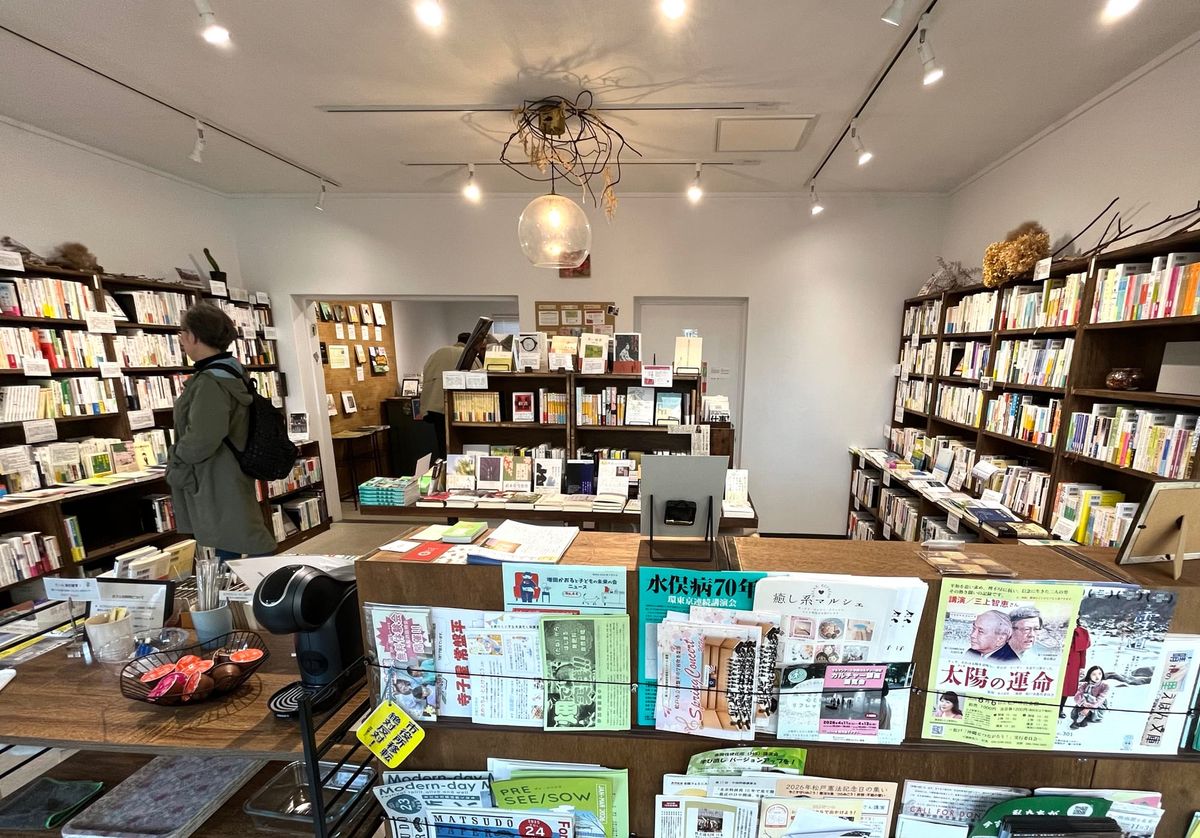
Shoji Suzuki, who has run the "Honya (本屋/Bookstore) BREAD & ROSES" in Matsudo City, Chiba Prefecture, since 2003 is one of many who lament this vertiginous decline. "The presence of a bookstore should be valued much higher as part of a neighborhood's value," he says.
A Bookstore Owner Who Doesn’t Have Time to Read
Suzuki had a personal mission for opening a bookstore. He thinks books are essential for human life and dignity and named his store after a slogan from the early 20th-century American labor and women's suffrage movement: "The worker must have bread, but she must have roses, too." It was a campaign demanding not just the sustenance required for survival (bread), but also the right to enjoy culture and human dignity (roses).
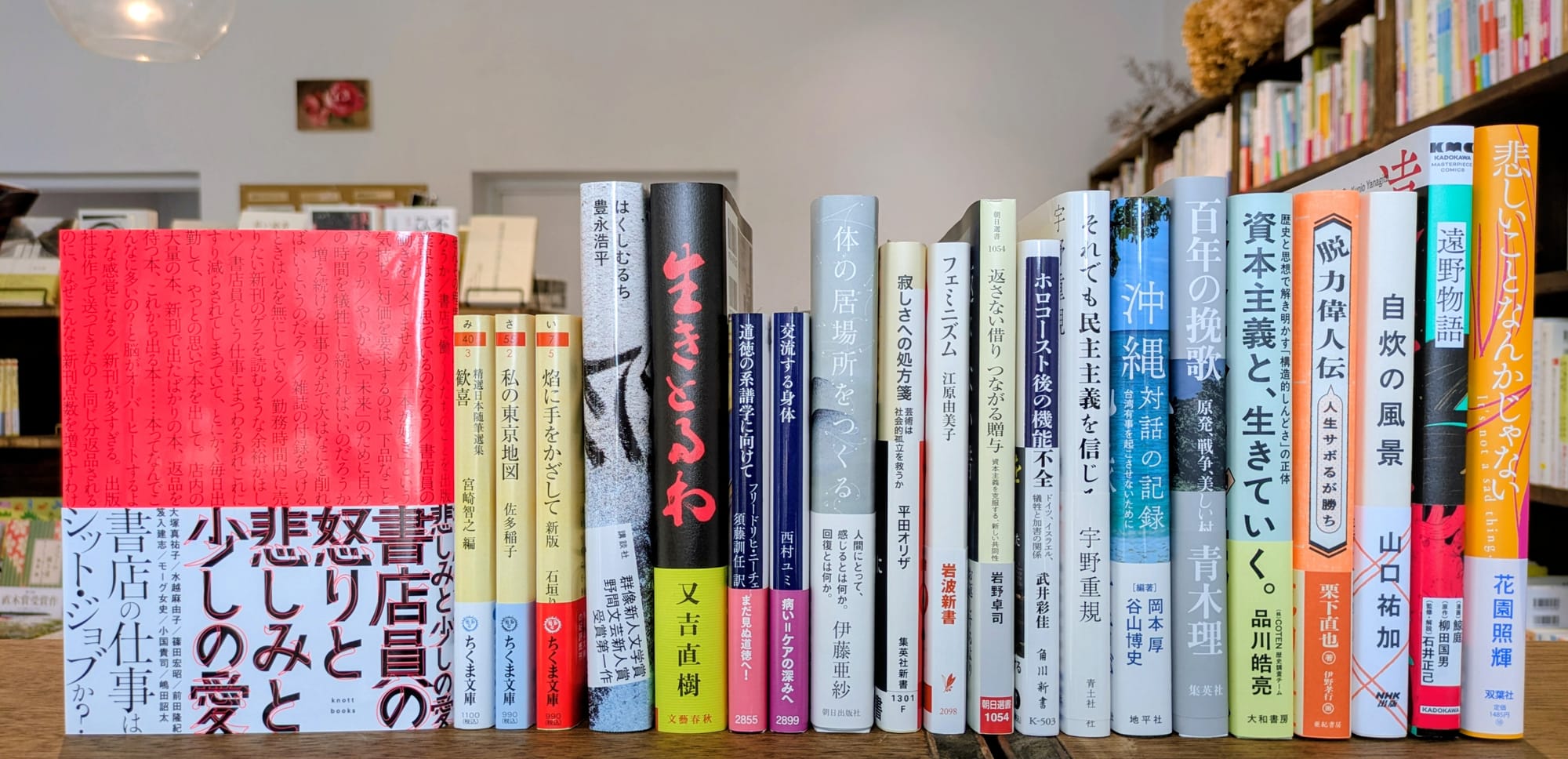
The store holds about 3,000 books. The majority are new releases chosen by Suzuki's discerning eyes, interspersed with a selection of used books from his personal collection. Hoping the store becomes a sanctuary for those struggling with the hardships of modern life, he stocks a wide range of genres, including lifestyle, poverty, history, philosophy, labor, gender, human rights, politics, and travel.
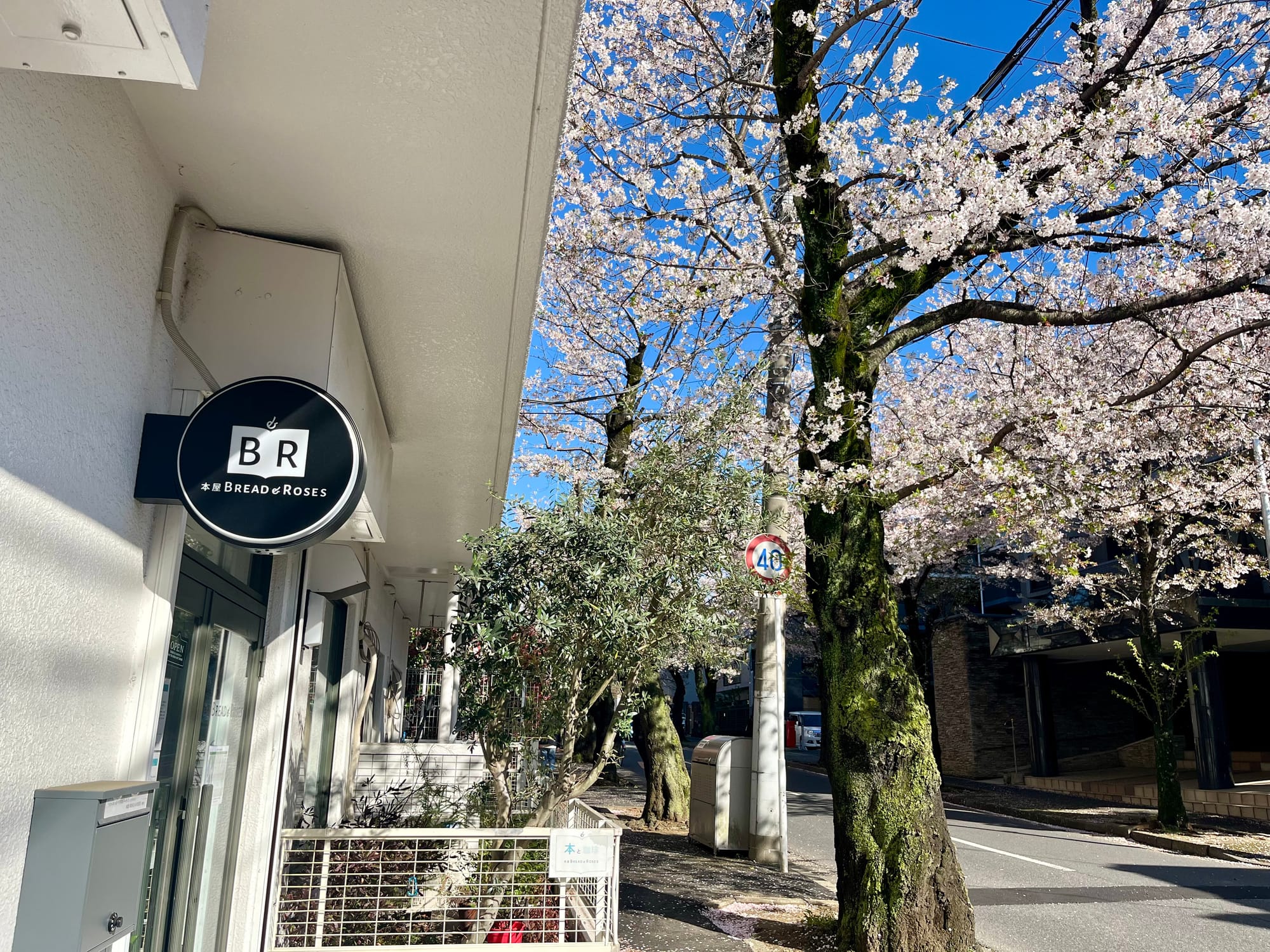
While many around advised Suzuki against his plan, he was motivated by a conviction: "A town needs a bookstore."
Nearly three years since opening, however, the reality is sobering. Suzuki runs the store almost entirely by himself, opening from 12 p.m. to 8 p.m. five days a week. He is in charge of everything from ordering, inventory management, and shelf curation to accounting. Covering the monthly rent, utilities, and his own living expenses solely through book sales is an immense challenge. Leading a life vastly different from a 30-year career in a labor union, he often lies awake at night wondering how he can survive.
Currently, the store is supported by a variety of revenue streams, including profits from a café and admission fees from regularly scheduled book clubs and author talk events. However, this also means an increased workload, requiring extra hours for sourcing and coordinating with guests. Suzuki jokes darkly: "Since starting a bookstore, I actually have less time to read."

Structural Distortions Caused by the Fixed-Price System
Honya BREAD & ROSES seems undeniably successful. Even during a few hours on a weekday, BREAD & ROSES enjoys a steady stream of customers. But it’s financially precarious because the publishing distribution system is uniquely optimized in Japan.
Publications typically flow from publishers to toritsugi (mega-distributors/wholesalers), to bookstores, and finally to the readers. In a standard transaction, the wholesale price from the distributor to the bookstore is fixed at approximately 77% of the retail price. In other words, even if a new 1,000-yen book sells, the bookstore’s gross profit margin is a mere 230 yen (23%). If monthly expenses were 100,000 yen, the store would need to sell over 435 books per month just to break even, even without accounting for labor costs.
This is exacerbated by the defining pillar of the Japanese publishing system, the Resale Price Maintenance system (再販制/Saihan-sei). Under this legal framework, bookstores are required to sell books at the fixed retail price established by publishers: They are not permitted to raise or lower prices at their discretion.
The fundamental tenet of private retail is to align profit margins with market demand by either lowering procurement costs or raising retail prices. Japanese bookstores, however, have completely lost control over their margins, with external entities dictating both wholesale and retail prices. It is a structure in which independent business owners have no pricing power and are forced to conform to an inflexible, rigid system. This is in stark contrast to the English-speaking publishing world, where retailers have pricing and discounting autonomy, allowing for creative adaptation within a market system.
To be fair, the rigid fixed-price system has historically contributed to cultural democratization on a national scale. It ensured that citizens in remote, rural areas could access books for the same price as those in major cities, with no additional shipping costs. And by preventing price wars, the system enabled publishers to continue producing low-volume, high-quality academic and specialized books while protecting authors' royalties.
But this system was only viable in the late 20th century, when the print medium, particularly weekly/monthly magazines, was at its peak, thanks to the massive distribution margins generated by mass printing and consumption. While it may still be effective for mega-chains, it is fundamentally incompatible with the business model of small independent bookstores such as BREAD & ROSES, which carefully deliver books one at a time.
The options for distributors willing to handle small-batch orders are now extremely limited, leaving bookstores to bear the shipping costs themselves. However, legally, they cannot pass on these shipping costs to the consumer through the retail price. As a result, owners face a brutal daily trade-off between cost and speed: either delay orders until they reach a volume that reduces shipping fees or pay the costs out of pocket to avoid missing the window of peak reader interest.
This rigid deadlock contrasts sharply not only with the free-market English-speaking world but also with European models such as France, which successfully protects independent retailers through statutory fixed pricing combined with state-backed cultural subsidies that explicitly recognize books as public goods.
Bookstore as a Local Commons
Since the COVID-19 pandemic, society has renewed its appreciation for essential workers in healthcare and logistics. Yet, it rarely highlights cultural essential workers—those who maintain the infrastructure of the human spirit and dignity—or their precarious working conditions.
The reality of modern bookstores reveals a breaking point: these spaces are barely kept alive through the personal goodwill of owners who prioritize their love of literature over their own well-being. This mirrors the way capitalism has historically devalued and structurally exploited care work—such as housework, childcare, and eldercare—by making it unpaid or underpaid. An industrial structure that cannot survive without relying on individuals' self-sacrifice is fundamentally unsustainable.
It is easy to dismiss this devastation faced by bookstores as natural selection in the age of the internet. However, the role of a physical bookstore in a community goes far beyond the sale of packaged paper. It ensures equitable access to knowledge and offers serendipitous intellectual encounters and serves as a "third place" where strangers intersect—essentially, a local commons.
The Tokiwadaira district of Matsudo City, where BREAD & ROSES is located, is home to a massive danchi (public housing complex) built in the 1960s—a neighborhood that once symbolized Japan's rapid economic growth. More than half a century later, this area has now transformed into the frontlines of Japan’s hyper-aging society.
In such a community, the bookstore plays an important role. Elderly residents drop by during their walks to have a cup of tea, browse new books on the shelves, exchange words with the owner, and engage in dialogue about current social issues during events. This is neither a home, a hospital, nor a welfare facility. It is an alternative public space for restoring individual dignity.
A bookstore's social value cannot be measured by capitalist efficiency or purchasing algorithms. Just as American workers demanded "roses as well as bread" a century ago, bookstores deserve re-evaluation as a form of cultural capital that supports human dignity and as social capital that prevents community isolation. Before the individuals who anchor bookstores across the country burn out and close their doors for good, a solid new framework is urgently needed to fundamentally transform this distorted industrial structure.
“Books shape people’s lives,” Suzuki said. “I hope that bookstores continue to exist as places where many people make their own discoveries.”

Comments ()